Dental Office Cleaning: What Gets Cleaned and Who Does It

Dental office cleaning runs on a different rhythm from almost any other workplace. Operatories turn over all day, the front desk never really slows down, and every patient uses the same restrooms. By closing time, the practice has been through a lot, and it needs to look right again before the first patient walks in tomorrow.
This guide covers what professional cleaning in a dental practice includes, what stays with your clinical team, and how to plan a schedule that works around your hours.
Who Cleans What in a Dental Practice
The most important thing to settle is the split between your clinical team and your cleaning company. They do different jobs.
Your clinical team keeps responsibility for disinfecting dental chairs and instruments between patients. That work happens all day and follows your clinical protocols.
A cleaning company handles the facility itself, after hours: reception, waiting room, restrooms, staff areas and floors. They clean around your equipment without moving it.
Getting this split in writing avoids the most common problem in dental cleaning: a task that each side thinks the other is doing.
Area-by-Area Cleaning Checklist
Waiting Room and Reception
- ✓Wipe check-in counters and the public side of reception desks
- ✓Clean waiting room seating, including chair arms
- ✓Disinfect door handles, light switches and other high-touch surfaces
- ✓Empty general trash
- ✓Vacuum or mop floors
Operatories
- ✓Clean operatory surfaces within the agreed scope
- ✓Clean operatory floors at the end of the day
- ✓Work around chairs and equipment without moving them
Sterilization Room
- ✓Clean sterilization room floors and counters
- ✓Leave instruments and clinical equipment to your team
Restrooms
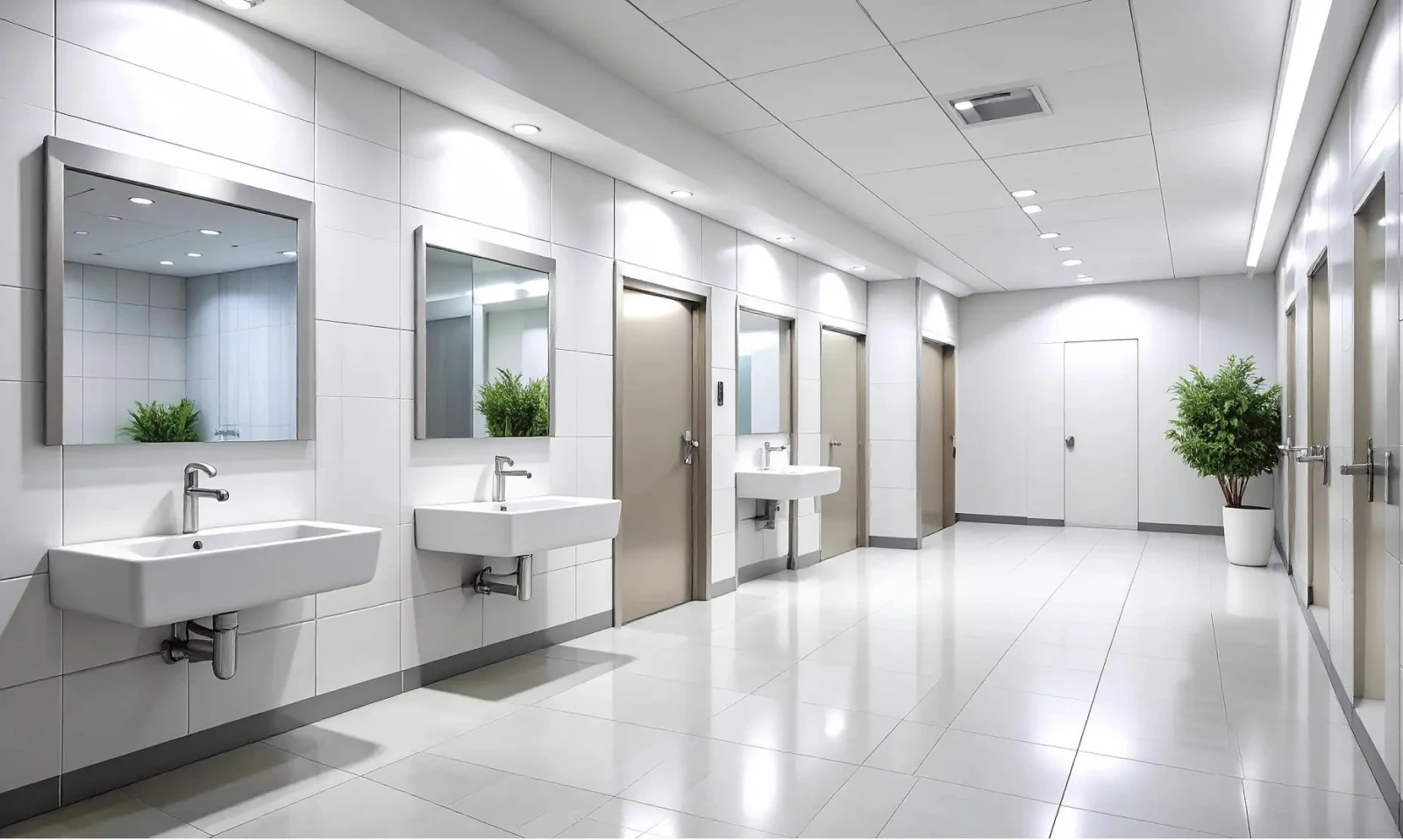
- ✓Clean and disinfect toilets, sinks, fixtures and mirrors
- ✓Mop floors
- ✓Empty general trash
Staff Areas
- ✓Wipe breakroom counters and sinks
- ✓Clean staff restrooms
- ✓Empty trash and mop floors
What Routine Cleaning Does Not Include
Some things are deliberately kept out of routine cleaning:
- Regulated medical waste and sharps containers. These have to be collected by a licensed medical waste hauler, so they stay with the provider you already use.
- Biohazard spills. Blood and bodily-fluid cleanup is a separate, specialized service.
- Patient records and computers. These aren't touched unless they're part of the agreed scope.
- Disinfection of dental chairs and instruments between patients, which remains with your clinical team.
A good cleaning crew will clean around sharps containers and biohazard bins without opening or moving them, and will empty only general, non-regulated trash.
How Disinfection Fits In
Surfaces should be cleaned first and then treated with disinfecting products where appropriate. Products only work as directed when they're used according to their label, including contact time: the product has to stay wet on the surface for as long as the label says. If your practice already specifies a product, ask your cleaning company whether they can use it.
It's worth being realistic about what this does. Cleaning and disinfecting reduce germs on surfaces. They don't prevent illness, and no honest company will promise a space is free of every virus or bacteria.
Planning Your Cleaning Schedule
Most dental practices are cleaned after hours, when patient areas are empty. That way the crew can work through operatories and restrooms without interrupting care, and the practice is ready when the first patient arrives.
How often depends on how many days you see patients. Restrooms and the waiting room take the most traffic, so they need attention at every visit. A deeper clean of floors, vents and hard-to-reach areas on a periodic basis keeps the practice from slowly looking worn. Our guide on how often a medical office should be cleaned goes into frequency in more detail.
Questions to Ask a Cleaning Company
- ✓Do you clean dental practices, and what areas do you cover?
- ✓Which tasks stay with our clinical team?
- ✓How do you handle sharps containers and biohazard bins?
- ✓Do you touch patient records or computers?
- ✓What products do you use, and can you use ours?
- ✓Will the same team come each visit?
Other Times to Book Extra Cleaning
Beyond regular service, practices often need a one-off clean:
- ✓A deep clean before reopening or after renovations
- ✓Added disinfection after an illness was reported in the office
Common Dental Cleaning Gaps
Even well-run practices run into the same few problems:
Unclear Responsibilities
If the scope doesn't say who cleans operatory surfaces and who disinfects chairs, something gets missed. Write it down and share it with both your team and the cleaning crew.
Restrooms Treated as an Afterthought
Every patient and staff member uses the restrooms, often several times a day. They should be cleaned at every visit, not just when they look dirty.
Front Desk Clutter
Crews can't clean properly around stacks of paperwork. Clearing the public side of reception at the end of each day makes cleaning faster and more thorough, and keeps patient information out of the way.
Floors in the Sterilization Room
These floors see constant foot traffic and spills. Make sure they're clearly in scope and cleaned at the end of each day.
Preparing the Practice for the Crew
A few end-of-day habits help:
- Clear counters you want cleaned.
- Make sure sharps containers and biohazard bins are closed and in their usual place.
- Lock away patient records.
- Note any spills or issues for the crew lead.
Dental Office Cleaning With EEB
EEB provides healthcare facility and dental office cleaning in NYC and on Long Island. We clean waiting rooms, reception areas, operatory surfaces and floors, sterilization room floors and counters, restrooms and staff areas after hours, following your practice's approved scope. Your clinical team keeps responsibility for disinfecting dental chairs and instruments between patients, and we clean around your equipment without moving it.
Crew members who work in healthcare spaces are background-checked and trained in bloodborne pathogen safety, glove and PPE use, and our color-coded method before the first visit. They do not handle, move or read patient records, and the same team comes to your practice at every visit.
We clean dental and medical practices in all five NYC boroughs and on Long Island, including Baldwin, Freeport, Hempstead, Levittown and Valley Stream in Nassau County, and Babylon, Deer Park and Lindenhurst in Suffolk County. To plan cleaning for your practice, contact EEB's healthcare cleaning team.
Discussion & Comments (0)
Leave a Comment
No comments yet
Be the first to share your thoughts or ask a question!